October 2025
As I write from the hospital bedside of my mother-in-law, I think of Italy, the country of her birth, the country where she had all three of her children, the land upon which I married my husband and had my own son.
The heel of the boot, I’d always say when asked about the tiny town this side of the family originated from. You’d miss Palo del Colle if you blinked too quickly driving through the Provincia di Bari, a county known for its production of amaro, rocky beaches, huge mansions of caves, and olive production. Some of the most beautiful sights I’ve ever seen were in Bari. Consider Alberobello (“beautiful tree” in Italian), famous for its trulli (domes) houses, or Bitonto, a quiet town that stays up late, where I once waited over two hours in a restaurant for pizza, or Matera, the ancient city of cave dwellings that housed people not much more advanced (and I mean this kindly) than cavemen, or Lecce, one of the most incredible and well-kept secrets of Italy. In one special week, I had several solo meals there and enjoyed many hours on a private beach, swimming in water that might as well have been aquarium glass. Giovinazzo, just a hop away from Palo, contains a rocky beach where my mother in law’s brother (I guess that makes him my uncle, I start to conceive here in the darkened room) Nino pulled a squid from the water and cleaned it slowly and carefully before us, sifting it back and forth like a gold digger would his pan in a creek. And the calamaro was, indeed, like gold to the family, and we ate it later that day for lunch, raw with lemon and a bit of home-grown unfiltered olive oil.
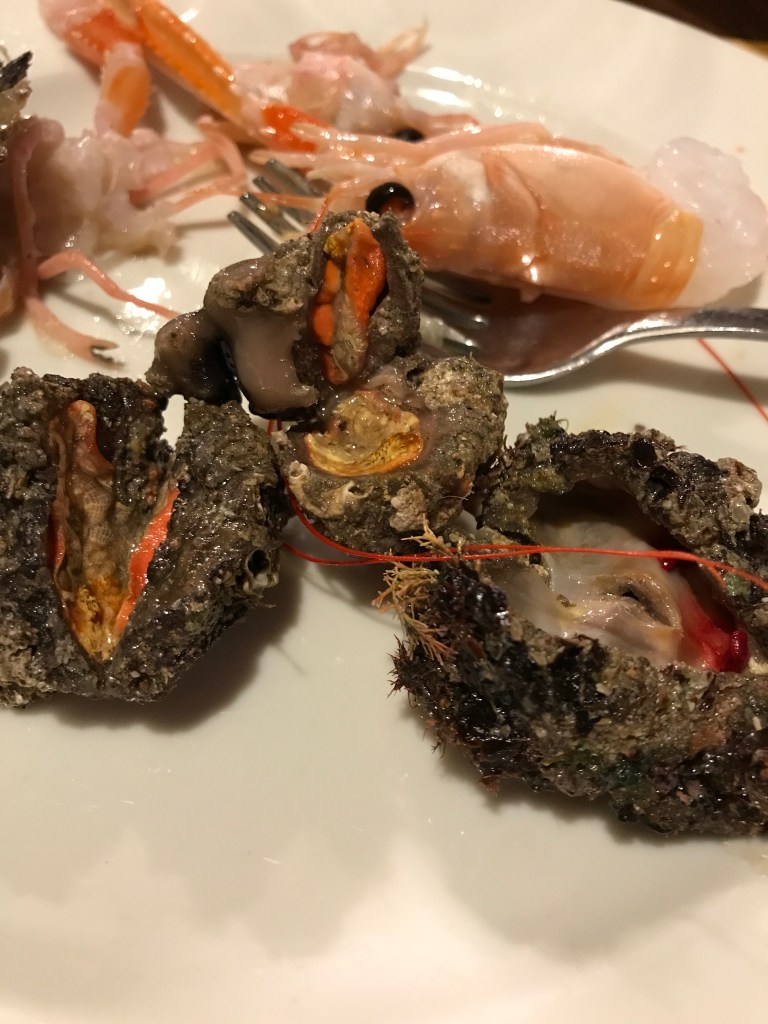
The larger region is home to many incredible towns, including Cerignola, the name also of my favorite large green olive, and Gallipoli, a miraculous little spot that happens to be where the Aegean meets the Dardanelles strait, causing a unique ecosystem in the water not unlike an estuary, where the unique climate of what must be brackish water is home to creatures you can find exactly nowhere else in the world. While visiting Lecce, we hopped over to Gallipoli one night for dinner and ate a tray of strange raw shellfish I’d never seen before and haven’t since, including red oysters, sweet bright shrimp, and oddly shaped clams.
The region’s name, you must know by now, is Puglia. The dialects there are myriad, differing slightly from town to town, having absorbed influences from Albania, Greece, and northern Africa across the water and God knows where else, since they end up sounding more like Chinese than proper Italian. Oftentimes, a word has no relation to that of its origin language or Latin at all, making it more like an entirely new language rather than a dialect, so perfectionists and linguists will find this challenging to master.
I learned by listening. I was forced to try because Mike never took the time to translate. No one did. They must’ve thought I was content to hear their ridiculous cacophony unawares. They’ve learned (the hard way?) since: that’s not me. I picked up a few French-sounding words straightaway, and the rest is history. In fact, tonight when I entered the room, Tonetta/Toni/Antonia/Antonetta (or Nonna, to my son) was alert, and I said, loudly, “Ches ta fash?,” the Palese bastardization of “Che stai facciendo?” or “What are you doing?” I heard Mike give a teeny, surprised chuckle from behind me.
After he left, I spoke with her a bit in the darkened room. (Italians like spaces dark and stifling whenever possible.) Through the CPAP machine, she was muffled and mostly incoherent, but nonetheless I leaned in and conversed whenever I could understand her.
She turns 92 next month, and I’ll miss the occasion, since I’ll be driving my own mother to retrieve belongings in her (former) home several states away. She lives with me now, as does my father. My in-laws lived with us for a few months a couple of years ago when Tonetta broke her hip, since we were closest to the rehab facility. Now she and my father-in-law live with my sister-in-law down the street from us. It’s one big, happy, dying family.
Dying, ironically, because it’s that time of life, when I, feeling still 30 like my time has just begun, am nearly 54, my husband five years older, my siblings-in-law all in their 60s. I really don’t think one ever sees this coming. Certainly, when I married Mike in 2008 in Rome, the 7th century deconsecrated church glowed, and our 70 or so guests enjoyed a lovely reception in a modern (art deco period) building with a balcony we waved from as “New York, New York” thumped in the background, and the nearby Ambassador’s residence sounded with celebrations of the Fourth of July. It hearkened of a complex past while foretelling a halcyon future.
Three of my father’s four grandparents came from Italy, the fourth was first generation. One of my great-grandmothers evidently was also from the Bari Province, if not Palo del Colle. It’s funny how you can end up marrying a relative unwittingly. And according to my 23andMe, the Belgians on my mother’s side (she was born in Liege) must have dabbled in the loving of Italians, too, since I, New Jersey-born, daughter of a zero generation Belgian, am for some hardly explicable reason more than 50 percent Italian.
My mother-in-law stirs and talks in her sleep. Sometimes I think she is alert and speaking to me, and I’m right, and sometimes she is babbling. She says “Michael” distinctly, accented MY-KOLL and loud, never Michele, the actual name of her son. If I don’t understand her, I disregard her, similar to when she’s not in the hospital, except instead of incoherent mumbo jumbo, she’s saying something insulting, usually a question as to why I would be wearing a particular item of clothing. I’ve learned to ignore these moments as I recognize in her a desire to provoke, and I don’t like to grant undeserving wishes. Once, in the very beginning, she made me cry, but that was the only time. I know better about her intentions now, after years of her saving me the whole tomatoes in the sauce, after years of appreciating that I learned her language and was one of the few people she could have long conversations with.
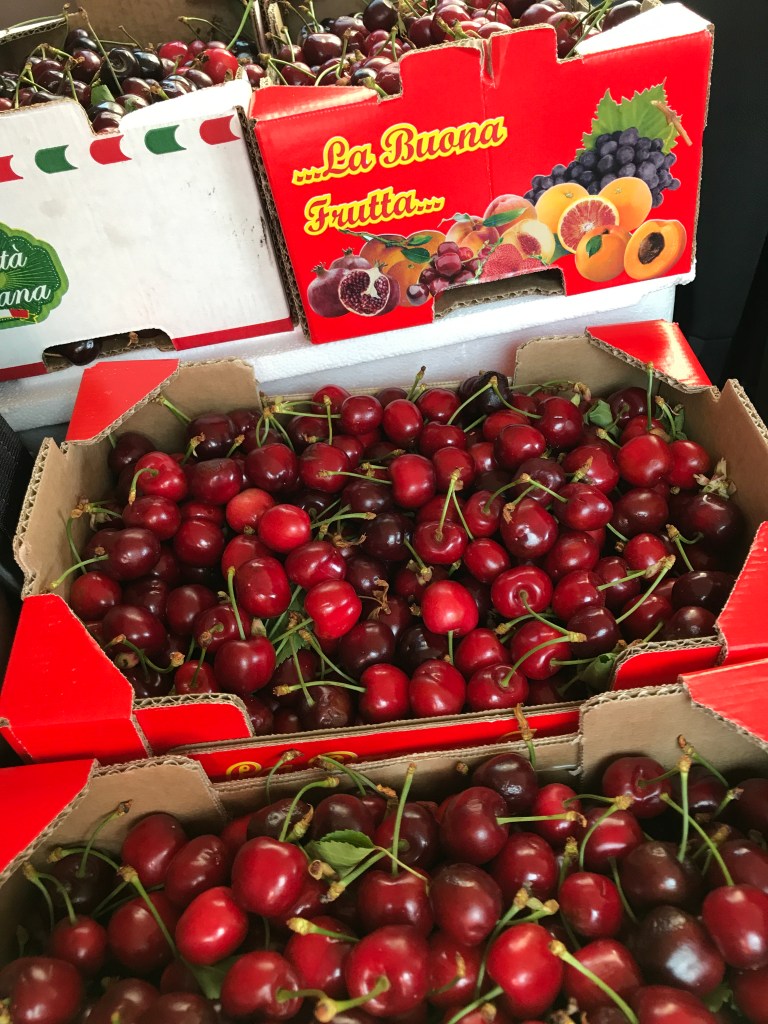
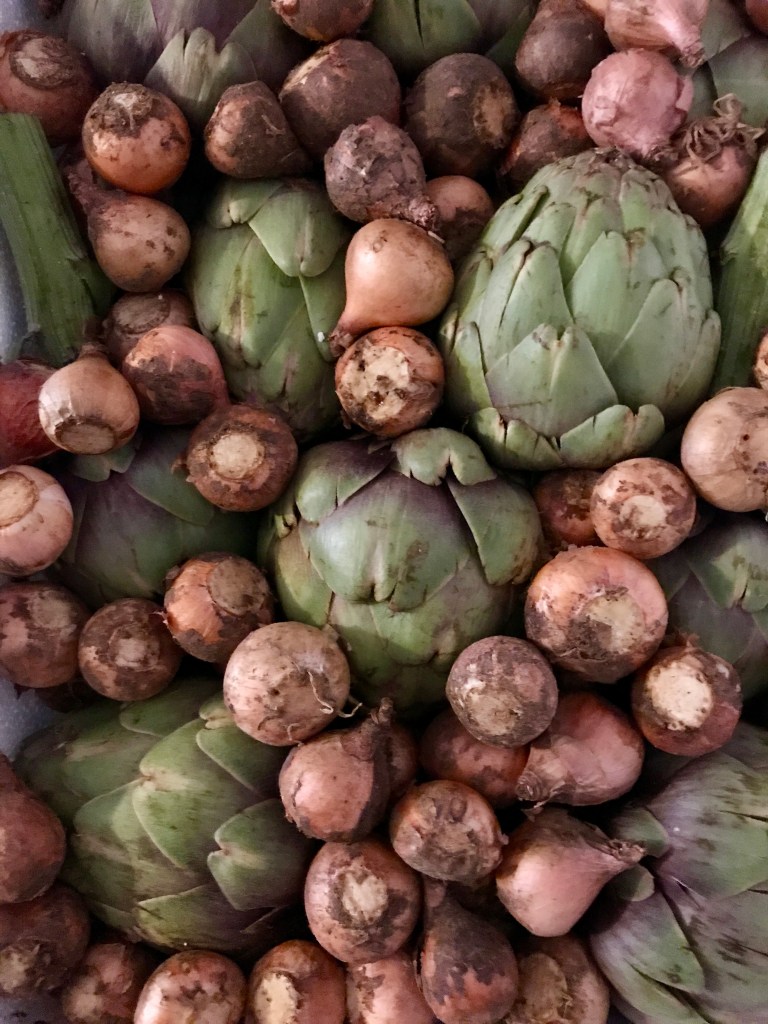
Nino is a similar cynic, the same sparkle in his gray-green eyes when they amuse themselves over someone else’s assumed silliness. As of this writing, it’s been about ten years since I’ve seen him and Zia Margherita and the cousins and grandchildren, though I sometimes think of them in Palo, all living together, young and old, rising in the summers to the man in the little truck yelling, “Cieliegie!” (Cherries!”) on repeat right below the bedroom window, and showering in the smallest shower ever created, and never using air conditioning, and eating daily in the finished basement, a step down from the street, instead of the main part of the house. I imagine them frying the uncured black olives with tomatoes, the bitter oily goodness contrasting with the sweet tomatoes. I think of the nearby produce market with the huge vats of cicoria and strange, delicious lampascioni onions (actually hyacinth bulbs) that allegedly are known (at least in this family) for causing gas. I never noticed, always drawn to the bitter vegetables, so good on their own with oil or on a sandwich. I remember also the parades in Palo, held for any number of bizarre occasions, when the townspeople join in and old ladies more wrinkle than person watch from tiny balconies with underwear hanging from them.
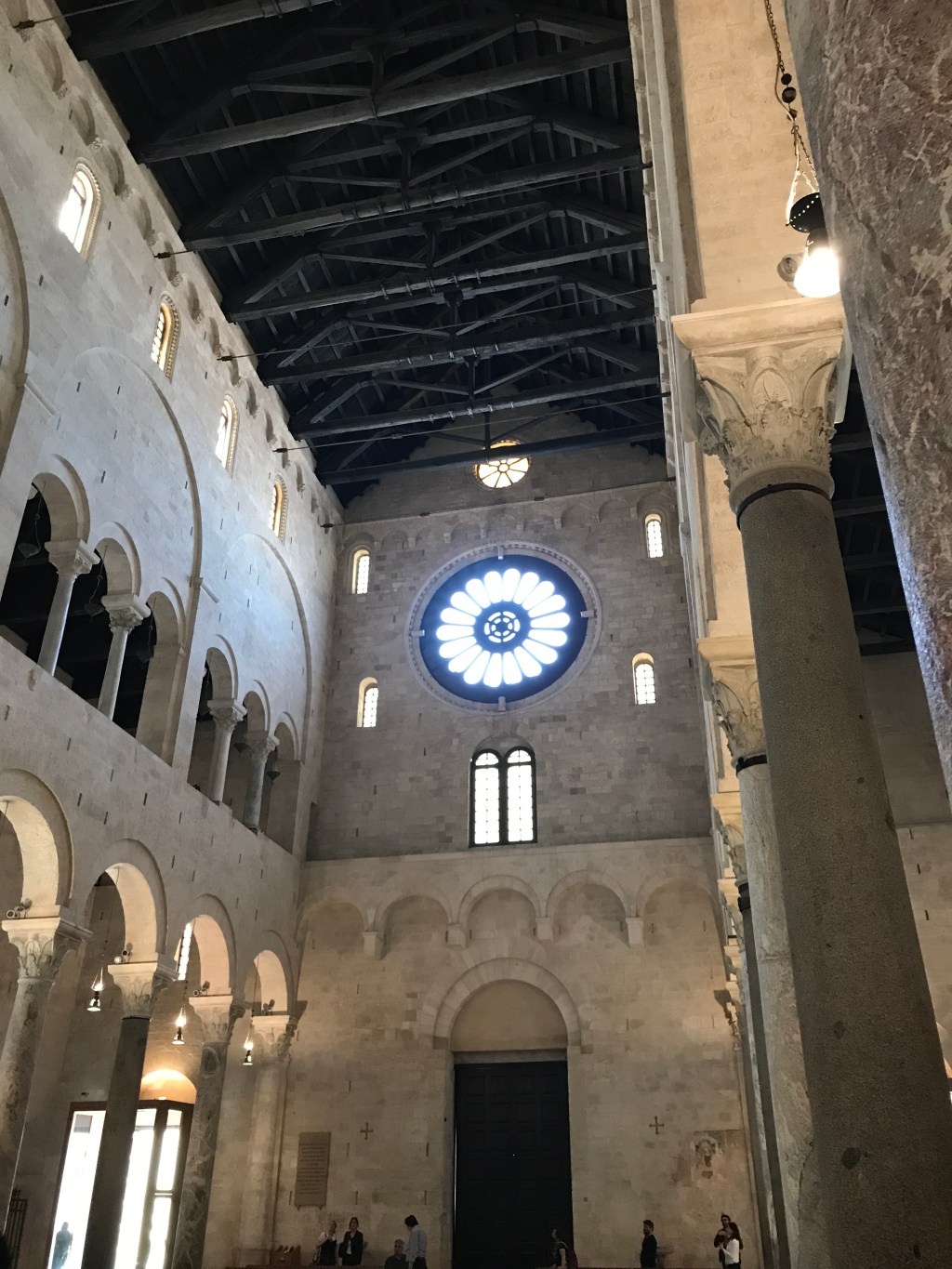
The festivals in the region, too, are renowned. In the town of Bari proper, the main cathedral hosts a display of presepi, or nativity scenes, that people travel far to see during the holidays, and vendors sell true hot chocolate, (again, slightly bitter) melted chocolate with milk or cream, like drinking a steaming cup of Italian love. Do not go in a rush; it won’t be a successful trip for you. There are foods to sample, always ice cream, always meats. There are windows to look into, and doors to walk through, as the stores are inevitably open very late during these celebrations, and even the people who live streetfront are milling about and welcoming you in.
Maybe Italy is where bittersweet was invented. Maybe Puglia is the font of all things horrible and wonderful at once.
 The Optimistic Traveller
Leave a comment